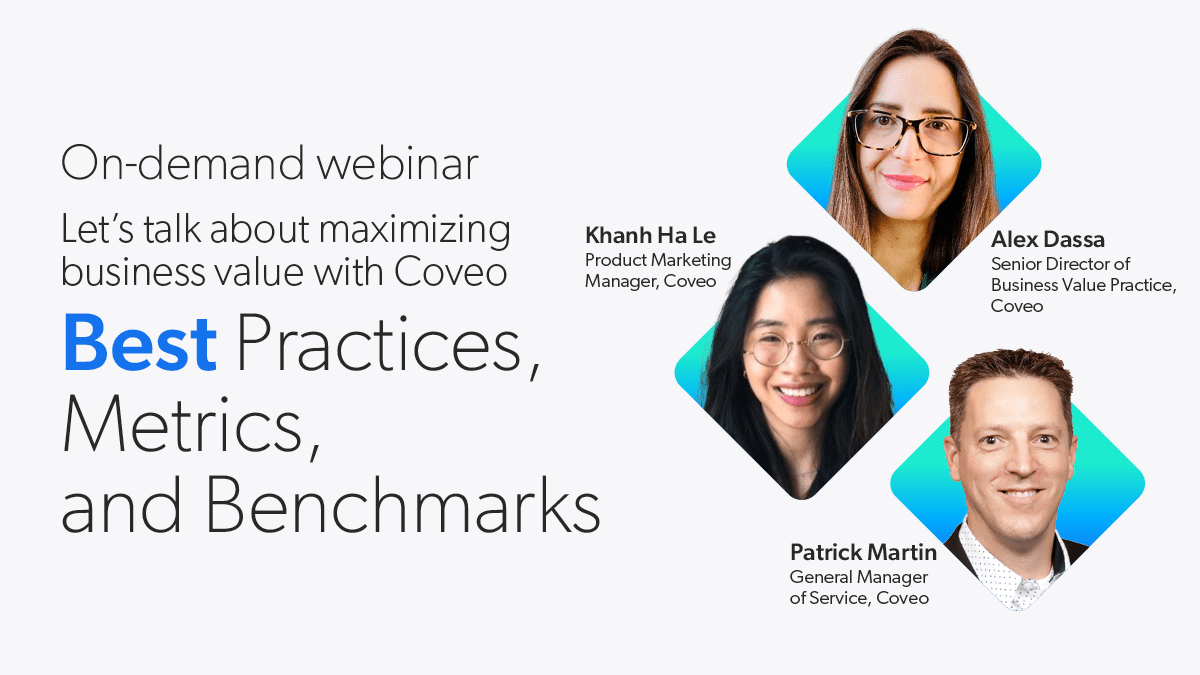
Hi, everyone. Hope you're all doing very, very well today. So, yeah, I'm just gonna wait for another, for another minute for people to join in, and I'm just gonna start with the housekeeping items. So just one. Alright. So I'm gonna go ahead with some housekeeping items before we start this webinar. So this event will run until eleven forty five. That is we have forty five minutes together, you know, for the discussions, and then for the presenters to, you know, to talk about the main subject. However, we do have, like, a fifteen minutes of if you have any additional questions, comments, or anything that you would like to discuss and bring up with the panelists. Today's webinar is being recorded, and we will be sharing a link for you along with an event recap after the event is complete. We welcome you to revisit the content your self and share it with your colleagues after the event. We also invite you to ask, you know, like, to to post your comments or, like, ask any questions in the QA, just, you know, the QA chat box just on your screen. If you have any questions, for the speaker at any point, feel free to post it right there. Just type it in, and I will be holding an FAQ portion at the end of the event. So for today's event, hi. My name is I am the product marketing manager at Coveo for service. And today, for our panelists, we have Alex Dasha, in the, in line. So she has been advising the world largest companies on their business transformation and corporate strategy since two thousand and five. She is a senior director in charge of Coveo strategy business value team. So, essentially, this is a team that works with prospective customers to quantify projected business results associated with Coveo deployment. So they they have been delivering hundreds of these assessment and work in collaboration with our clients in an, in in an iterative way to make sure our assessment are data driven and grounded, in the reality. So the Coveo business value team also works very closely with our InstaBay to access the value realized by our customers and, realized by our customers and driven by Coveo. And next, we have Patrick Martin. He is our newly appointed, general general manager for service, and he has been in the technology service industry for over twenty years. So he pretty much discovered a passion for customer service back in nineteen ninety nine and had been using his expertise to lead and then to put out fires for Coveo technical support team since two thousand eighteen. So yeah. Hi, and welcome. Next up for the agenda today. So for the first portion of this webinar, Alex is gonna be providing us with, you know, an overview of how Coveo deliver value across the customer journey. And then after that, we're gonna go into a deep dive discussion on the IPX, self-service, assistive service, and knowledge management. Lastly, we're gonna have some closing, closing remark by Alex just like, you know, to wrap it up, tying everything up, you know, with a nice little bow tie. And then the last portion of the event is gonna be the q and a. Yeah. So, Alex, you know, I'm just gonna hand it over to Alex right now. Perfect. Hi, everyone. So just before we get started, just sharing a quick disclaimer to mention it. Any of the financial information that's shown, in this webinar is a potential illustration of, the value that Coveo can drive. Okay. So let's talk about how, to deliver value across the customer journey. And to anchor our discussion, on the customer journey, in service, here's a simple high level overview of a typical service experience flow, obtaining in product help, self serving, and, submitting cases to the assisted service center. And Patrick and I are gonna be going into specifics for each of the major stages of this journey and talking about how Coveo can drive value, across the whole customer journey. First, before we go into that, discussion, I'll give a just brief introduction and overview as to how we look at business value, at, at Cobain. Okay. Sorry. Just one second. I have some technical, difficulties. Oh, okay. Yeah. Sorry about that. We'll get that a moment then. Okay. Great. So, how does Coveo optimize, the customer journey in a way, that drives both customer satisfaction and, on the other side of the balance, drives performance for the service organization. So let's start with self-service success. This is where Coveo delivers prescriptive answers, that help customers solve their own issues. And this not only allows companies to reach a lot of customers at a very low cost, but also research shows that customers want to self serve. I guess a sad commentary on humanity, but we would prefer to self serve ourselves and interact with a human or even a chatbot. Right? And so the ability to self serve is really driving down the customer effort that is involved on their part to get answers to their inquiries and their questions, and it also drives up their satisfaction with the overall experience. In terms of case deflection, Coveo is excellent at helping companies intercept and avoid a case submission that can be a really big cost strain on service organizations, before it reaches an agent. And that's by using Coveo technology to proactively suggest solutions before that case is submitted. That can be on the self-service portal, or within a case creation page itself. And, you know, this is where organizations will see their caseload reduced, which is a big driver of support organization costs, and, once again, see customer satisfaction go up. For situations where the customer does still submit a case and there are situations where our customers actually want their end users to do so. Coveo works to make agents more productive and more effective and efficient at resolving those customer inquiries. So reducing the, time to resolution, particularly around average handling time, reducing case escalations if your support organization is a tiered, support organization, increasing first contact resolution and, even, shortening the length of time that it can take new agents to get fully proficient in their roles, which if you consider how high the turnover rate can be sometimes in certain parts of the support organization can be a big driver of productivity lift overall. Because Coveo acts to up skill agents in the course of their responding to customer inquiries and issues by providing agents with contextually relevant information that they need to rapidly resolve these issues. Kodeo also acts to equip field workers to provide efficient service and empowers them to suggest complementary products and services to contribute to the revenue generating potential of the service organization, which is also something that we see happening, with our customers that deploy recommendations on their self-service portal. It can really have a boost for cross selling and upselling objectives. So in addition to all of this, Coveo enables companies to avoid the customer experiencing an issue altogether, right, through our in product experience, solution or IPX. And within the product, in context of using that product, given that, you know, most products and services are are delivered digitally to customers, there is some sort of digital channel to engage customers and push the content that they need, that they're looking for even before they get to the stage of saying I have an issue that needs resolving. So with Coveo, organizations are able to avoid the customer experiencing that issue altogether and even experiencing the need to self serve by providing a solution immediately within the product. And this becomes really interesting from a P and L perspective because the cost to serve of each of these stages increases as you go further to the right. So the more you can solve upstream, right, and avoid unnecessary downstream activity, the more efficient you're making your operations and the more satisfied you're making your end user customer. Coveo also allows our customers to go even further. Right? So with with service data, with the insight panel, Coveo customers are able to find opportunities to predict potential customer problems before they even occur, and be able to plan to inform customers proactively. And we talked also about, you know, revenue generating opportunities and how Coveo customers can leverage insights to identify revenue generating opportunities within that service data so that they can further position the service, organization to be not only a cost center but also a revenue generating business if that is how your business priorities are aligned. So in a nutshell, essentially, our customers turn to Coveo to deliver experiences that are personalized to their customers' individual needs while supercharging their business performance with improved profitability and empowering both agents, or service reps or however they're referred to engineers and knowledge managers to align their efforts with strategic business objectives while driving customer satisfaction. So quite a balancing act, but, what we see with our customers is that what ends up happening is as, their customer base and their revenue grows, organizations can build profitable customer relationships that drive satisfaction while keeping the support cost curve as flat as possible, right, and avoiding that cost curve to grow at the same pace as revenue. And that really is in a nutshell the the value prop of the service organization. Mhmm. Thanks. Thank you for the insight, Alex, and thank you for the very good overview of, you know, the customer journey in service and how Coveo can, in general, bring values, to each of these journey. So, Patrick, I would like to actually start our deep dive discussion. And, you know, one of the thing that I noticed within the slide is that, you know, the customer journey started out with IPX. Can you please explain to us why that is? Yeah. Sure. You know, when and Alex kinda touched on it a little bit is, you know, when we're faced with an issue, even if you think about our own experiences, the first reflex is you're probably gonna go to Google, you're gonna do a search, and you're gonna navigate through the different, you know, results that you get. Sometimes you're gonna end up on, you know, proprietary information from, you know, the the supplier that you're looking information for. Sometimes you're gonna be brought into other different types of forms and this and that. You can't really as a service supplier, you can't really own that experience. And whether you like it or not, the experience that the user will have is a reflection of your brand. Will they be able to find information, whether it's your proprietary information or not? It it it really impacts, you know, how smooth that experience is gonna be. If you kind of bring it, you know, where the journey actually starts, your users or your customers are working within your products. They're working within your your applications. And the IPX solution allows you to keep that customer experience within your ecosystem, which means if I need help, I don't need to punch out to a different digital, digital resource to find information. I just need to click this help button. And through personalization, you're able to understand where that user is in your application and tailor the experience, in line with that. So you can even bring that personalization aspect within your product. So you keep your customers within your ecosystem. You own that experience and you can make it a puzzle. So how how do you how does the effective use of in product experience that is, you know, keeping your customers within your ecosystem impact the business value that Coveo can deliver to service organizations? Sure. Yeah. So, you know, Patrick kind of pretty much already answered this, but happy to wrap up. I mean, as we're able to serve customers directly in the product experience and provide that seamless route to answer their questions, we enable users to have a more effortless experience, right, and to drive more satisfaction while driving down the cost to serve. So the further left, on this curve, we're able to answer users' questions and inquiries and solve their issues, the higher the perceived value to the customer. Right? The the more and the more users that can be served by each service dollar and the lower the overall cost to serve, so happier customers and a more performant service organization. We're we're not preaching that all issues should be resolved through IPX and self-service channel. Right? Some types of issues are more aptly served by the assisted service center, and it makes sense, to have those flow through. So, you know, cross sell, upsell opportunities, for example, if if your agents are empowered to do so, security considerations or other business considerations and business rules. Right? But, generally, outside of those types of particularities, there is this shift left imperative that applies. And what we see, for the customers that have deployed Coveo is that the insights that are generated through Coveo empower knowledge managers to be more effective in their knowledge management activities. Right? So fueling more effective results from in product help and self-service channels. So it's kind of a virtuous cycle that gets engaged, with deploying Coveo and, certainly, the the strength of existing knowledge management programs, strategies, practices, etcetera accelerate, the velocity of that that virtuous cycle where insights from Coveo will leverage will will bring up rather, you know, where there are content gaps, where there are issues brewing, allow knowledge managers, therefore, to put out content, that really serves their end users' needs and, therefore, enable for more effective self-service, and it and it goes on and on. Yeah. If I may add to the you know, basically, is, you know, as Alex said, assistant support is always gonna be something that you need to offer. Right? Because there will be those complex issues. There will be the bugs. You know, you really need to have, you know, a a a an assisted channel offering for your customers. And there will be those customers who just, you know, want to talk to someone. They they want that human connection when they need assistance. However, if you're able to take all the known easy issues and make them available through self-service for those who want to leverage these channels and bring them, you know, very early on in the journey within the the, in the product help, you are really reducing your cost to serve. But at the same time, you're empowering your own customers to help them solve unknown issues, and you're keeping your agents motivated and challenged on taking on new stuff and not having to answer the same repetitive, easy questions that did, you know, that are already documented. So there's definitely value not just on the customer satisfaction side of things and on the customer experience side of things, but also on the agent side as well. Yeah. And that that what we see with our customers is it it drives employee satisfaction, which we know is tied to better, you know, employee engagement, better employee retention. And that can be a real drain on support organizations, from, you know, an OPEX from a cost perspective where, you know, losing that tacit knowledge and recruitment costs associated with unwanted attrition, can be a real drain. So it it it really has that, you know, multiplier effect as as Patrick illustrated, beyond, just, you know, enabling customers to self serve, which already is a big win. So Mhmm. So that is actually very, very insightful. I really Coveo hearing about all of this. So just, like, following the user journey. So whether I have search on Google, I look up the content on the IPX, or any other entry point, to seek for the right information. And, actually, even before, like, you know, like, picking up the phone or something to paste on, you know, on the site, the next thing I would usually do to, you know, to to get help is actually going into the community to try to find the right answers to my problems from my peers. So if I already use the IPX to find content when I go into the community, do I still need to do the same search? Or, you know, what would be the experience that Coveo can offer at this point where I try to self-service? That's a very good question. And, you know, if we look at it in theory, is that if you have a robust IPX experience where all your content is there and you were not able to self serve, you should be able to offer your customers the opportunity to look at different channels, like a customer community or even submit a case directly. If you do decide to use other self-service channels, what you want to avoid is, you know, repeating the same experience over and over again. You know, it's just like when if you if you just get our own experiences when you call when you call your ISP provider, let's say, and you talk to a level one person, and you have to tell your story. And then they transfer you to another level two person. You have to retell your story. And then you go to level three, and you have to retell your story. Your frustration is increasing. Frustration goes up. Customer effort goes up, which means the status actually goes down. So if we're thinking about it, you know, the same concept from a, from a self-service experience, If I've been recommended document a, b, c, and the IPX, and then I go into a a custom portal, community, whatnot, I search, and I get the same recommendations. Mhmm. Not a great experience. Right? So what you really need to do, and that's what Coveo allows you to do, is having this unified experience. So in the IPX, I'm authenticated. You know who I am. I'm in your product. If I transfer this over to the community of the self-service portal, I should remain authenticated, which means you know what I looked at. So you already know which documents I looked at. You know which ones I did not. And now you know everything about me, so you can really personalize that experience and say, well, these are the documents you've already viewed, but, hey, you might have missed this one. Mhmm. This one might be interesting. Or there might be this community thread that might be relevant to you. Or finally, it's like you can see very quickly that you consumed everything that was relevant to you for that particular problem, and your best option is to submit a case or or go through the assistance support channels. So the the if you combine the unified view that Coveo allows you to have and you you leverage the personalization capabilities that we have, you can really make this a seamless transition from the IPX to self-service channels if that's the flow of the customer journey. That's very interesting. And then, you know, like, is a you know, say, for example, if I have a chatbot, then, you know, can Coveo integrate a chatbot into the experience as well? Because I think a lot of customers actually have some kind of a chatbot, with them. Yeah. Definitely. You know, Coveo can tie into, basically, but, you know, the the the caveat to that is I'll go back to what I said. You you just don't wanna repeat the same experiences. Or you don't want to a customer go through the IPX and go then go through the search bar on your self-service site, then go through the chatbot, and go through the community and see the same things over and over again. So you wanna make sure that that flow is is smooth. And, basically, in the end is we need to be able to route the customer to the right channel based on where they are in their journey. So So if they've already hit two self-service channels and they haven't been successful in self serving, you might not wanna have them go through a third self service channel. You know, it's okay. Let let let let's connect you to someone. Yeah. As if you do install, like, the chatbot, the chatbot might just take a few information to be able to route your chat to a live agent, and then you move into the live chat experience instead of just, you know, going through these different, you know, self-service experiences. You don't want it to be disjointed. You don't want it to be, like, your siloed between IPX, the community, the chatbot. You wanna make sure that it's smooth very forward, that it's smooth very smoothly across all your channels. Mhmm. So what are the metrics for effective self-service that support leaders should consider? Yeah. Sure. Let's go to the next page. So, generally, you know, keeping things simple, we look at self-service success and case the flush. Self-service success is really the rate at which customers can help themselves successfully answering their their questions, their inquiries, solving their issues, in a in a customer self-service portal way, or or beforehand from an IPX perspective. When we look at, you know, the, case avoidance that we can drive, through effective self-service, we talk about case deflection, whether that's implicit or explicit. So case deflection is when customers find answers to their issues, whether it be on the self-service portal or whether they're already thinking I'm gonna submit a case and they're on that case creation page. Right? And they're able to, through the knowledge articles or content that is proposed to them, actually find an answer to their question and not submit that case through. And there's there's different ways of looking at this. You know, companies have different, definitions. But, generally, when we talk about implicit case deflection, we're looking at the visits to, you know, self-service portal with search, a click. So they're gonna be clicking on what's been proposed to them, but there's, no case submit within x time frame, twenty four hours, forty eight hours, what have you. And then you divide that by the the total visits. Explicit case deflection, is a little different. So here you're looking at the, you know, visits to the case creation page with a a click on a document and or possibly a click on canceling out of that case creation page, and there's been no case submit. And you're looking at that over the total visits. Now there's variations, in this, but, generally, what's good to retain is that, you know, self-service success, I have effectively self served myself and answered my question. Case deflection is looking at the journey or the route that a customer has taken by looking at what they're viewing, what they're clicking on to determine, for those that had an intent to submit a case, how have we effectively provided answers to their questions and avoided that case submission? And then, of course, you can monetize that, as a a gain or a benefit or, you know, a cost avoidance by looking at, you know, the average cost per case and multiplying that by those cases that were avoided through implicit or explicit, case deflection. Mhmm. And how can Coveo help with these metrics? Well, I mean, Coveo is at the center of all of this. So, you know, we we've basically power of self-service in case of question across all the different self-service channels. So Camille is gonna allow you to measure that self-service success because we know what people consume in terms of knowledge and in terms of content, and we can tie that to the query. So if I'm going in, I'm, you know, anonymous, I type in user manual, and I click on the user manual and my session stops here, you can definitely count this as a successful self-service session. So and and and with the with the query, you know that, you know, I was probably not gonna log a case. Maybe I was because it's a user manual, but being a different example, if I'm looking for a certification program for business for assistant administrators, I'm looking for training. You know, that's my intent with the query. And if there is a program, you know, I can consume it. If there isn't, well, I have a content gap. So that's what we can do on self-service success. When it comes to case deflection, as as Alex mentioned, you know, a lot of people just bundle case deflection, you know, as a whole, or they mostly look at explicit case deflection, which is probably the easiest one to measure because you know for sure that the customer had an intent on submitting a case because they went to your case creation. So that one's pretty simple. You start creating a case, and you get some recommendations in terms of content. You click on the content. You cancel the process. That is execution. Implicit is a little bit more tricky. In theory, you're gonna measure implicit case selection when your users are authenticated in one of your self-service channels. There will be some type of search or content recommendation that will, generate some type of click event. And then you're gonna be able to tie that to any case activity and say, okay. User a did a search on topic x and then not log a case on x within x amount of time, you can count this as an implicit case deflection because you're implying that they were going to submit a case if they did not find what they're looking for. So Camille can help, you know, measure those different, those different measures and those different metrics because we we understand who clicks when. We have the query, so we're able to tie all that together. And and and, basically, once you have these, as Alex mentioned, you're able to to monetize the value or the ROI from using Coveo because you know that these cases were avoided. They were reflected and denied it in contact center. Alex, is there anything else you wanna add? No. I, you know, I think we're gonna cover a little later how your case deflection can be quite a big relief on support organizations, and and I think what the value proof point we're gonna show is is Tableau that saved, the equivalent of eighteen million dollars annually just through improved case deflection with Coveo. So it's a it's, you know, it it it's definitely an important, driver of the cost structure on that for for a support organization. Mhmm. Okay. So in the last part of the customer journey, we're gonna go over assist to support. So what are the most important metrics do you think that will enable better operational metrics for call centers or for service organizations. Yeah. Yeah. Let's talk about assisted service. That that's, it's good. Let's go to the next page. Okay. So there's a number of metrics as you can see here, a little bit of an eye chart. Number of metrics that Coveo impacts positively. Let's start with those that, reduce overall caseload. So, you know, kind of transitioning from from self-service. And let's talk about first contact resolution and case escalation. So, you know, by providing agents in the assisted service center with the relevant information that, that's required to answer the the cases that they're handling live, We see, our customers increase the rate of first contact resolution, meaning that the rate of recontacts by customers on the same issue goes down, which which reduces the caseload, drives down the processor. And the satisfaction of customers goes up because they are now resolving their issue on the first contact. Similarly, we see the case escalation rate decrease for those, Coveo customers that have a tiered assistant service center organization. So, you know, tier one or level one of of agent engineer, customer service rep, tier two, etcetera. And, you know, the tier two, tier three are are, a higher loaded cost than the tier one. Right? So as much as we can resolve customer inquiries with the, first level or tier of agent, what we see well, first of all, you're increasing customer satisfaction. Right? Because you don't now need to, be passed, you know, from one, person to another as as Patrick was was talking about earlier illustrating earlier. But you're also reducing the caseload, for the more specialized, more costly tiers of agents, which means a lower cost to serve. And similarly to, you know, what Patrick was evoking before, you're increasing engagement, you're increasing satisfaction for those agents at the entry level to be empowered to handle more complex cases as opposed to always handing those off because they don't know how to answer them. So, you know, again, that can translate to reduced attrition rate, further driving down that cost to serve because you're more effectively, managing and reducing unwanted attrition, and that can be pretty costly, in terms of low morale, in terms of tacit knowledge loss, and and so on and so forth. So that multiplier effect, we're just looking at, you know, FCR, first contact resolution case escalation, but it has all of these tentacles into driving value across the, service organization. Some other areas of impact. So, just as Coveo surfaces, you know, more relevant information, for agents to, better handle inquiries, we, therefore see a drop in the time to resolve cases. Right? Because we're surfacing more relevant information quickly, and we're indexing and unifying all those content sources. So agents no longer have to search multiple repositories to get to the right answer, and they don't even necessarily really need to manually search for knowledge articles to help resolve, the customer's issues that they're working because Coveo powers contextual search to show results as agents are opening up their cases. So, we see with our customers, that agents spend a significant portion of their handling time on a case searching for this information, and this is where Coveo drastically reduces, that unproductive, lost time. And then the unification of all those content sources is also a big value driver. I think TSIA data indicated that, you know, on average, support agents sometimes have up to seventeen different repositories where information can be found. So imagine having to have a, you know, a map in your mind of which repository to go to to get to information. There's a lot of, time lost. We also see how, improved case classification with Coveo leads to, reducing the time spent on triage, or routing cases to the appropriate agent, and it reduces situations where cases may have been misrouted, which can create a lot of, effort and frustration on the part of the customer and also end up, you know, longer resolution time, more agents involved, so on and so forth. So all of this together, you know, acts to reduce the time to resolution for customers, proves their satisfaction, drives down the cost to serve on the service side, enables agents, to serve more customers, more effectively. And just as when we were talking about IPX and self-service, all of these value drivers are further enhanced by a robust knowledge management program, right, which Coveo feeds into. So that that virtuous cycle. Mhmm. Yeah. And, Patrick, this question is for you since you have been, a leader for, you know, like, our support team and then for, you know, for support in the tech industry for a while now. I'm just want to pick your brain on which one of these metrics do you think apply specifically to the tech industry? That's a a good question, and the easy answer is they all do. However, they need to be taken into into context. Right? Because depending on the channel that your customer you're using or the different channels that you have, you will probably want them to measure different, different metrics based on it. And I'll take a a quick a quick example. Let's say we take assistant channels and we compare phone versus web case submission. If you're on the phone or even live chat, first contact resolution is probably gonna be it's probably probably gonna be something that you're gonna want to measure versus on your web case submission form. You're probably gonna shift this to first view resolution because there are some some delays here in in it's kind of in a synchronous communication channel. So the chances of you being able to to to resolve that on the first contact are, you know, slim because there's probably gonna be a little bit of back and forth. It was like, okay. Please tell me more. What are the steps to reproduce? I'm able to reproduce this. Can you send me a screenshot? So there's a lot of back and forth between the customer and and and the agent, which means you're not gonna be able to resolve this on the first contact. So if you're trying to measure first contact resolution on the web the same way that you are with your your phone or your your your synchronous system channels, you're gonna get huge differences between the two. So what you wanna do is you wanna adapt and look at first data resolution. You can still measure first contact resolution wise. It's probably gonna be much lower than your synchronous, than your synchronous channels. So I think this is where you need to to kinda put things into perspective. But definitely, you know, everything that ties into, you know, customer satisfaction or customer effort, you wanna make sure that you measure across all of your channels because that is that is important. You wanna be able to identify which channels are creating most frustration or more friction, because that's where we have an area of improvement. You might be very, very good on the phone, but your live chat might not be as great, Or you might have a very good self-service experience when people are looking for product documentation. But when they actually have an issue, your knowledge based articles that are created by support might not be as detailed or as useful. So being able to break that down and looking at the right metric based on the right channel and what we really want to measure and what we want to have in terms of business outcomes, that that's where it's key. We wanna break it down and kinda look at it in that kind of silent view. Mhmm. I actually have, like, so many follow-up questions for that, actually, just to, you know, just to be respectful of the time since we have, you know, six minutes left of the of the, of the discussion such, of the, queue, of our, you know, discussion such, portion. Let's move on to, you know, like, our last topic for today, which is knowledge management. So just to make sure, you know, Coveo will return results from day one. What is the best practice after understanding and mapping out the customer journey from a business value perspective? Do you think you know, would you recommend to our customers today? That means, you know, Kaveo is a great tool, and, you know, you're able to measure so many different things. But, really, the foundation of this tool is your knowledge management program. If you don't have a robust knowledge management program, if you don't have a very strong content strategy, Coveo is not gonna be the silver bullet. It's gonna solve everything. Right? Because if if you don't have content to find or if your content is not structured in a way and it's easy to find, then that makes sense. You're not using, you know, the customer terminology. I mean, you're not detailed enough. You know? It it's not gonna yield miracles. So they they are tied at the hip. They go hand in hand. Right? It's like if I give you a Ferrari, but and I don't give you the fuel to put in it, it's gonna stay parked in your garage. It's it's basically the same thing. So definitely, knowledge management needs to be at the heart of everything you do, and knowledge management is not just a support thing. And so, yes, we can say, like, support creates knowledge articles, but you have to extend that to all your content types that you think are going to be valuable to your customer. So your official product documentation. You know, if it's if it resides somewhere else, you bring it in. You're training. You know, every all all the training. If it's if it's if it's public, great. If it's if it's a, a paid offering, then, you know, build documents that will say, okay. You need training? Here's a here's a here's an offering that you could look at and put ways to contact their their account manager or their customer success manager to be able to to get those those motions in play. But you definitely have to think through your knowledge management program and your content strategy to make sure that you are able to achieve, what you want to and get the full a full ROI from the mail. Mhmm. So with that being said, how can Kavail analytics help identify, you know, these content gaps and other issues that you were mentioning earlier? Well, the beauty of it is that everything is fine. And so we we look at every click. We look at every to reading. We're building time and two together. So, definitely, the easiest content gap to to, look at is I search for a, I get no results. That is a clear content gap. So anything that any query that yields no results should definitely capture your knowledge manager's attention and say we need to we need to bridge that gap. But you can go beyond the queries that don't yield any results. You need to bring this back to your self-service success. And then look at, you know, which queries are yielding successful self-service sessions. And I would recommend that you even break it down by document type. As I mentioned a little bit earlier, you might have very high self-service on your product documentation. When people are looking at your knowledge articles, they end up submitting cases. That is a clear red flag that you have to improve your knowledge articles because they're not yielding the same results as your product documentation, let's say. So this is every this is where conveyor analytics can help you slice and dice the data and and the activity, understand your customer journey, what is yielding the results you're expecting, what is not, and take corrective actions to ensure that you are meeting your objectives in terms of self-service and, most of all, that you're delivering a pleasant digital customer experience for your customers. And on the agent side of things, it's the same thing. You know, it allows you to measure agent adoption around the inside panel, who's leveraging content, who is not, what are the content gaps, and all of that. So, you know, you can you can really hit a home run here by fueling the digital customer experience as well as empowering your agents to deliver this personalized, and tailored experience for your customers in a very efficient way. Mhmm. Thank you, Patrick. So now, it is time to wrap up this great discussion. So, yeah, Alex, can you please wrap us up? Sure. So there's a lot of value drivers that Coveo delivers to our customers, and and, you know, the relative importance of of each of these metrics is gonna depend on the scope of your Coveo, what matters to your organization, the structure of your your service organization, and, and what's more relevant to your approach to service. But overall, Coveo has delivered, big results and just a few notable value proof points here that that are, that are are fun to talk about. So zero, which I I find illustrates the Coveo very well. Zero drove a thirty seven percent reduction in their cost to serve while their subscribers to their services increased a hundred and twenty four percent. So, you know, let's say it's what we were talking about earlier around the the, subscription or revenue curve going up and your cost to to serve curve staying relatively flat. In this case, it declined. And they also drove a twenty per point increase in their, net promoter score. So, you know, an important measure for them of customer advocacy and and satisfaction. Tableau, I think I mentioned earlier, they just by quantifying, improved case deflection and how that was tied to case avoidance, a drop in their case volume, they were able to identify eighteen million dollars in cost savings, to their, service organization. Another company, Ozisoft, which is now part of Aviva, they drove down their case resolution time by over fifty percent. And that's that's major when you consider that resolution time can take days. Right? And the portion that Coveo is acting on in a big way is really the proportion of handling time that's spent searching. So really a massive impact. And so when you look at what matters for your organization and and look to quantify it, the, the value drivers, really add up. But it but it really is what what is the most pertinent for your organization. When we look to the value delivered, you know, to Xero, Tableau, Zisoft, and and and many of our other clients, When we quantify the gain, that our customers can expect and and have, realized, those benefits can be looked at in terms of hours saved, cases reduced, and and, you know, dollars of cost avoided. Some of our customers choose to realize these gains as cost takeout. Others look to repurpose hours toward more effective customer resolution, more strategic activities. But either way, you know, there's many benefits to be quantified to demonstrate the success of the initiatives that you've championed in your organization, that have improved, the performance of your business. And and beyond everything that Coveo brings in terms of technology, in terms of training, technical support, so on, there are key considerations to take into account to maximize the benefits that, that you can continue to achieve from Coveo. So we touched on a few throughout this discussion, most notably, the role of knowledge management and, you know, having a robust, knowledge management program, strategy, and approach, and continuous improvement. There's also, you know, the user interface and how prominently, search is positioned on the self-service portal, for example, for your customers, can play a big role. We actually had a a client, that wasn't seeing much, adoption of, search from a a self-service perspective. And it was because the search bar was hidden. And, like, you know, it's suggesting that they reposition it. All of a sudden, they saw, okay. We we've got a greater adoption here. So little things like that, it's anecdotally kind of funny, but can drive a big, big impact from a benefit perspective. And and, of course, you know, any efforts involved in monitoring and promoting the adoption of Coveo among assisted, service employees can also go a long way because as the gains, you know, that that we, that we see among the, agents in the assisted service center can be really pinpointed to just a a subset of that agent population. The more that it's expanded outward and those success stories are shared, the more other agents will adopt the right ways of working and and, drive for maximization of those benefits. Mhmm. So for Patrick, is there any closing remarks that would you to add before we move on to the q a? And we actually have two questions in our q and a. Actually, the only thing I'd add to what Alex just mentioned is, you know, don't underestimate the the importance of having a robust data model to drive that level of personalization. So always, you know, think about, okay, if we wanna give a personalized experience, what what will we need to know about our customers, and how can we get this data? So, basically, thinking of if we had x, we could do y with it. So if you if you're capturing the customer journey, let's say, and you know that the person who is landing on your self-service channel is someone who has been a customer, for the last ten years, is a certified business administrator, or system administrator, you're probably not gonna personalize the experience the same way you would for a customer who's just in onboarding. The customer who's just in onboarding, you're probably gonna recommend some training, some certification, some user manuals, and things like that versus your more experienced person. You're probably gonna give them, you know, the more the the most up to date knowledge articles, what's new in the product, and things like that. And, you know, just landing and authenticating on the the self-service channel, without even searching can be a very positive experience if you have that level of information. So don't don't underestimate that because your data model is really gonna help and drive even more ROI that you get from the coming of because of our capabilities of personalizing, if you really wanna bring it down to the individual level, you need the data model to be able to drive that level of personalization. Mhmm. So for the first question that we, that we received, is this from, Vijay? So hi, Vijay. She's asking, so it seems like there is a lot of similarity between self-service success and implicit case deflection. Is there any overlap between these metrics? I can definitely take that one. The the the main difference you're right. There is somewhat of an overlap, which means implicit case deflection should be counted in your self-service you know, success metrics. However, the difference is that self-service success does not imply that a case would have been submitted. It means I'll go back to my example. If I'm looking for a certification program, that means I'm looking for training. I'm not gonna go to an assisted support channel because of that. I'm either gonna find the training that I'm looking for or I'm not, which will create a content gap. Well, that would be self-service success versus the implicit case deflection implies that a case would have been submitted. So usually, you're gonna measure implicit case deflection on knowledge articles that are being, that are being consumed, technical product documentation, anything that kind of against that they're using intent was I was I was gonna need assistant service with that. That. And, usually, implicit case deflection will be measured on authenticated sessions versus self-service success will be measured cost, authenticated, and anonymous sessions. Because sometimes it takes the question, if you really wanna measure that, you need to try the fact that they looked at something and they did not submit a case on that same topic within a certain amount of time. So to be able to tie the two together, you need to know who they were when they consume the the And if they're anonymous, you won't be able to to connect them to, which in that end science group, it was a self-service success. Hopefully, that answers the question. So the simple questions is from Janine. Can Coveo help us identify the difference between issues that cannot be solved and need to be handled by an agent? I'll I'll take a crack at that one, if you don't mind, Alex. Out of the gate with with our capabilities today, if you're k. Let me back up a bit. So if your question is, I'm on the self-service channel. I search for some things. Can Conveil know out of the gate whether this is new versus no? No. You're gonna go through the self-service channels. And if I don't find what I'm looking for, then, I'll submit a case, and this will come up as a content gap for us to fill that content gap, you know, in the future. If we think about forward looking around what we would like to do in terms of future functionality, at some point in time, yes, we would like to get there to to the point where we can understand if this is new versus no one and route the user to the most efficient channel based on what the problem is. Is. That is not available today. I can't say if or when that would be available. But if you think about, you know, really, allowing our customers to deliver a pleasant, frictionless customer experience, that is something that we could consider. Mhmm. Answering your question. Mhmm. Yeah. That's a very, very good question, Janine. Yeah. So please let us know if you have any follow-up questions or comment in the chat box. But, you know, if not okay. Yeah. She said thank you. So if not, I'm gonna close off the webinar right now. Thank you so much for attending, and don't forget that we'll be sending out, a follow-up and a recap of the event, for for for those who signed up. Yeah. So thank you for attending today. Thank you, Patrick, Alex, for coming over to the webinar and explain to us, you know, these wonderful metrics about the business values. Have a nice day, and I see you next time. Thanks, Thanks, everybody. Thank you.
Maximizing Self-Service Success and Case Deflection with Coveo
- Strategies for improving self-service success and case deflection rates
- How to empower agents with unified search and AI-driven recommendations
- The impact of in-product experiences (IPX) on reducing support costs
- Critical success factors for effective knowledge management


Make every experience relevant with Coveo